
Mineral-Based Arsenic Stabilization for Sargassum
Protecting Coasts Through Engineered Material Science
N8B3N Materials creates practical, field‑ready solutions that limit heavy‑metal migration in sargassum and organic waste streams, helping communities manage environmental risk with confidence.

The Sargassum & Arsenic Challenge
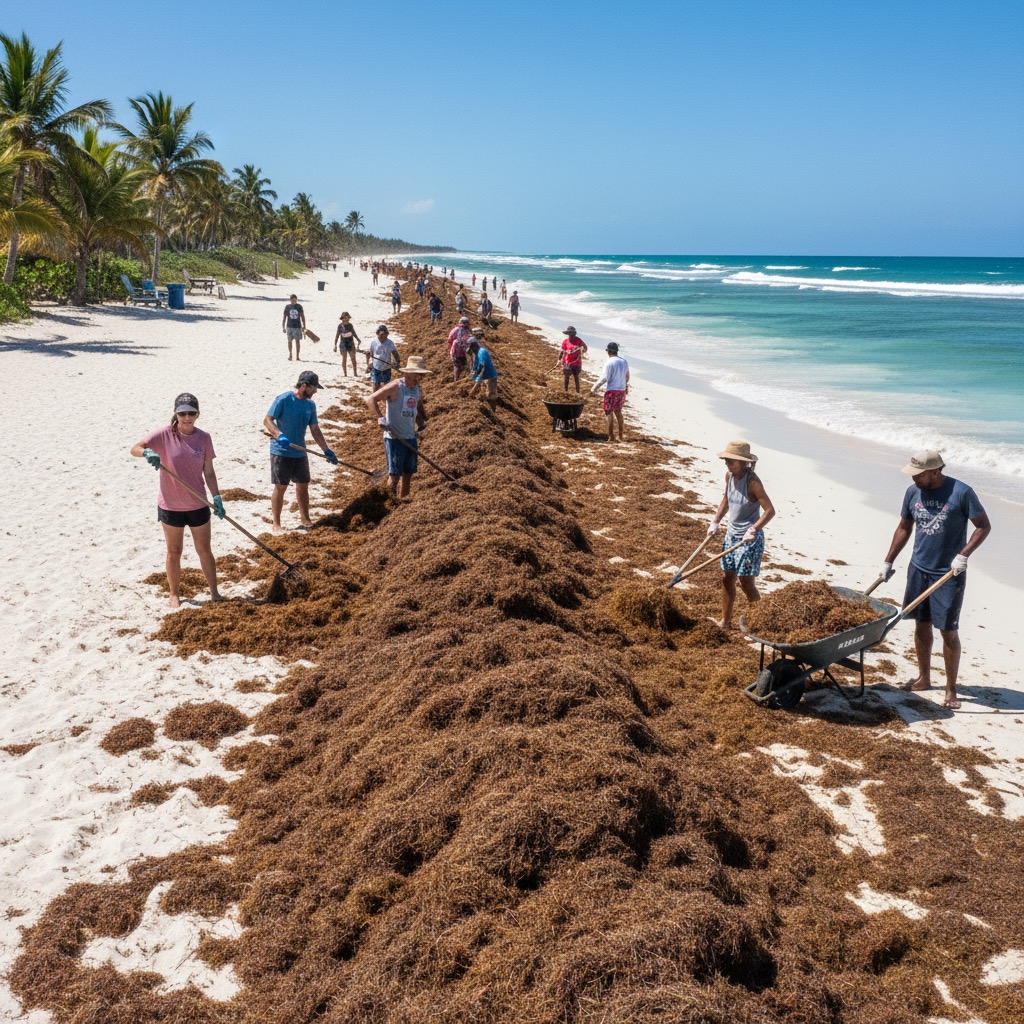
Massive sargassum landings naturally accumulate arsenic and other trace metals. As the biomass breaks down, these metals become increasingly mobile, creating leachate that can contaminate groundwater, coastal waters, and any site used for storage, transport, composting, or disposal.

Our Solution: FE Lock
FE Lock is a mineral‑engineered treatment formulated to stabilize arsenic within high‑organic matrices. By creating conditions that favor low‑mobility mineral phases, FE Lock limits arsenic release during decomposition and exposure, supporting safer handling, processing, and potential reuse of sargassum biomass.

How The Technology Works
FE Lock uses engineered mineral phases to promote surface complexation and geochemical stabilization, converting soluble inorganic arsenic into low‑mobility mineral forms. These reactions reduce leachability under real‑world environmental conditions, improving the stability and safety of treated biomass.
Who We Serve
Empowering coastal stakeholders with scalable, evidence‑based materials solutions that reduce environmental risk and improve operational safety.

Municipalities & Local Governments
Supporting public works, environmental services, and waste authorities with cost‑effective stabilization treatments that improve the safety of seasonal sargassum management, staging sites, and landfill operations.

Resorts & Cleanup Contractors
Supporting coastal hospitality operations and shoreline remediation teams with stabilization treatments that improve safety, reduce environmental risk, and streamline the management of organic debris.

Environmental Agencies & Researchers
Partnering on field‑validated studies, geochemical assessments, and circular‑economy initiatives that advance responsible heavy‑metal stabilization and support long‑term soil and ecosystem health.